Journey time: 2h 10min - 2h 20min
Frequency: Hourly Monday-Saturday (15 daily), every 2 hours Sunday (8 daily)
Operators: Translink (Northern Ireland Railways) & Iarnrod Eireann (Irish Rail)
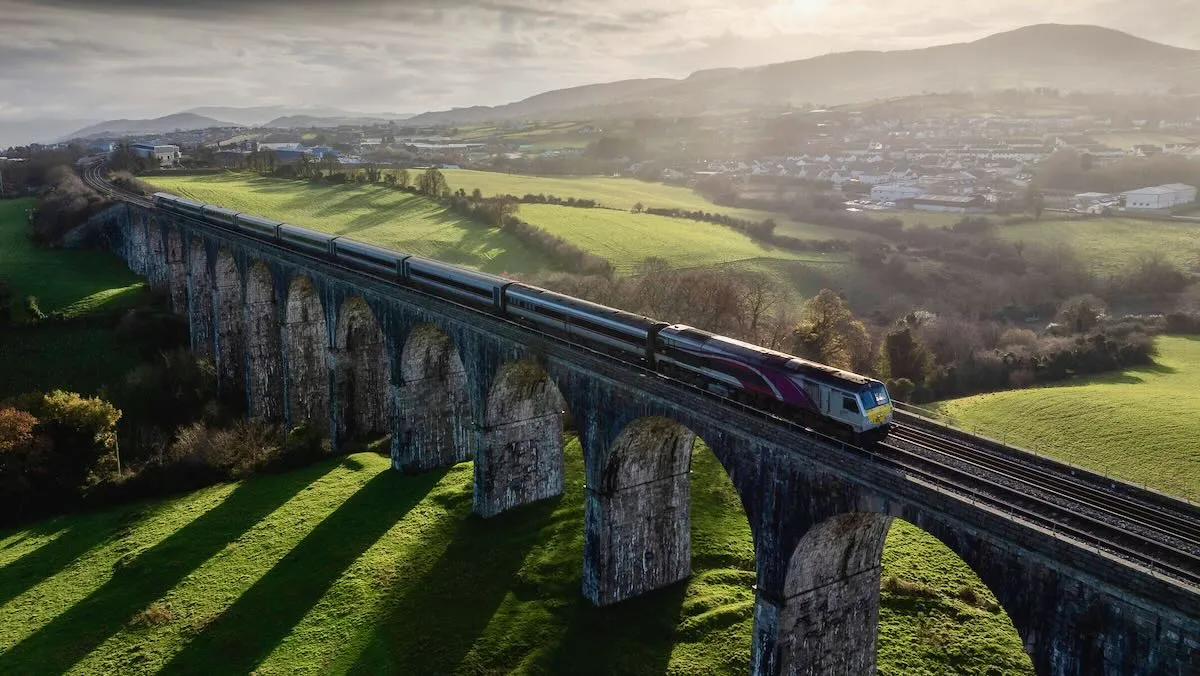
The Enterprise is the fastest and most comfortable way to travel between Belfast and Dublin. With hourly departures on weekdays and Saturdays, day trips are easy in either direction. There’s no need for passport checks or border formalities crossing between Northern Ireland and the Republic of Ireland.
Booking Your Ticket
Starting from Belfast:
Book at translink.co.uk. Advance fares can be cheaper if booked ahead, though prices vary. Book up to 80 minutes before departure for advance rates where available. A typical advance single bought online in standard class is £14.99, while a first class ticket costs £48.
If booking a return journey starting in Belfast, book the full return through Translink.
Starting from Dublin:
Book at irishrail.ie. Advance fares start from €13.99 single for standard class, €27.50 for first class. There are concessions, eg, a one-way ticket is €8.75 for young adults (16-25 with a valid Student Leap Card or other recognised card).
If booking a return journey starting in Dublin, book through Irish Rail - even if you’re currently in Belfast planning ahead.
Ticket collection:
- Belfast: You can collect tickets from machines at Grand Central Station, or use mobile tickets via the mLink app (for day, weekly, and monthly tickets - check app for Enterprise availability).
- Dublin: Collect from Irish Rail ticket machines at Connolly Station.
Tickets must be collected or be on your smartphone before boarding. Both operators’ websites will email you a collection reference.
Price note: Until late 2024, tickets were significantly more expensive when booked from Belfast. Translink introduced new flexible fares that more closely align with Irish Rail’s subsidised pricing, though some differences may remain.
Train Types
Since the service increased to approximately hourly in 2024, three different types of train now operate the Enterprise:
- Dedicated Enterprise trainsets: The original loco-hauled trains with Standard and Enterprise Plus (first class). These have the full catering service.
- Irish Rail Intercity Railcars (22000-class): Modern units with Standard and First Class, plus catering trolley.
- Translink Class 3000 units: Standard class only, no catering.
The mix varies daily depending on fleet availability and maintenance schedules. New battery-electric trains are on order (€165m project) with delivery expected by 2029, which will reduce journey time between Belfast and Dublin to under 2 hours.
Onboard
Standard Class:
Comfortable seats, power sockets, complimentary WiFi. Spacious luggage racks at the end of each carriage.
Enterprise Plus (First Class):
Available on dedicated Enterprise trainsets only. More legroom, reclining seats, complimentary newspapers. Hot meals available for purchase, served to your seat on trains with full catering (breakfast before 12pm, lunch/dinner after). A full Irish breakfast costs £10.80/€13.00, but there are veggie and ‘healthy’ options available too. Full menu here.
Catering:
- Dedicated Enterprise trains: Full onboard catering with hot meals served to Enterprise Plus passengers, trolley service for Standard
- ICR trains: Trolley service
- Class 3000 trains: No catering - bring your own refreshments
While the exact type of train on your service is usually available via the Translink or Irish Rail website, there can be changes in equipment if a technical problem arises.
Seat reservations:
Available when booking through Irish Rail. Not currently available when booking through Translink.
Bicycles:
Advance booking required. Check with your operator when booking your ticket.
Belfast Grand Central
Belfast’s trains moved to the new Grand Central station in 2024. It’s located on Great Victoria Street next to the former Europa Buscentre site, offering excellent connections to onward bus and rail services.
Getting there:
- On foot: 10-15 minutes from Belfast City Hall
- Bus: Frequent Glider and Metro services to Great Victoria Street
- Taxi: £5-8 from most city centre locations
Facilities:
Modern station with cafes, ticket machines, accessible toilets, and step-free access throughout.
Connections:
Direct trains to Derry~Londonderry, Larne, Bangor and Portadown. Glider bus rapid transit services throughout Belfast.
Dublin Connolly
Ireland’s busiest railway station, originally opened in 1844.
Getting there:
- DART: Frequent electric trains along the coast
- Bus: Multiple routes serve the station (including 782/784 to Dublin Airport)
- Luas: Red Line tram stop directly at the station entrance
- On foot: 10-15 minutes from O’Connell Street
Facilities:
Ticket machines, cafe, newsagent, accessible toilets.
Connections:
- DART coastal services (Howth, Malahide, Greystones, Bray)
- Trains to Sligo, Rosslare/Wexford
- Luas Red Line connects to Heuston Station (15 minutes) for trains to Cork, Galway, Limerick, Waterford, Kerry
The Journey
Best side to sit:
Right side heading north from Dublin to Belfast for sea views along the coast north of Dublin, the green hills of South Armagh, and glimpses of the Mourne Mountains.
Left side heading south from Belfast to Dublin for the same views.
The first 20 minutes heading north from Dublin run alongside Dublin Bay and through coastal suburbs. After Drogheda, the line runs inland before reaching Dundalk, with views across to the Mournes in County Down.
Stations served:
- Monday-Saturday: Belfast Grand Central - Portadown - Newry - Dundalk - Drogheda - Dublin Connolly
- Sundays: Some services also call at Lisburn and Lurgan
Mobile & Currency
Mobile signal:
Generally good throughout, though can drop in some rural sections between Newry and Dundalk. If you have a UK number, check with your provider about roaming charges when crossing the border: some UK networks include the Republic of Ireland in their plans, others charge extra.
Currency:
You’ll travel from pounds sterling (Belfast) to euros (Dublin). Grand Central has ATMs and currency exchange. Accept that you’ll need both currencies if staying more than a few hours in either city.
Onboard catering accepts card payments. Carry euros or card rather than relying on sterling acceptance.
Vs Other Options
Vs bus:
Buses (Translink Goldline, Bus Eireann) are cheaper but take around 2h 30min-3h. The train is more comfortable, more reliable, and faster except if your final destination is Dublin Airport, in which case get the direct bus from Grand Central.
Vs driving:
About the same time as driving the M1/A1 route, but you can work, read, or relax on the train. No parking costs in Dublin. Only drive if you need a car at your destination.