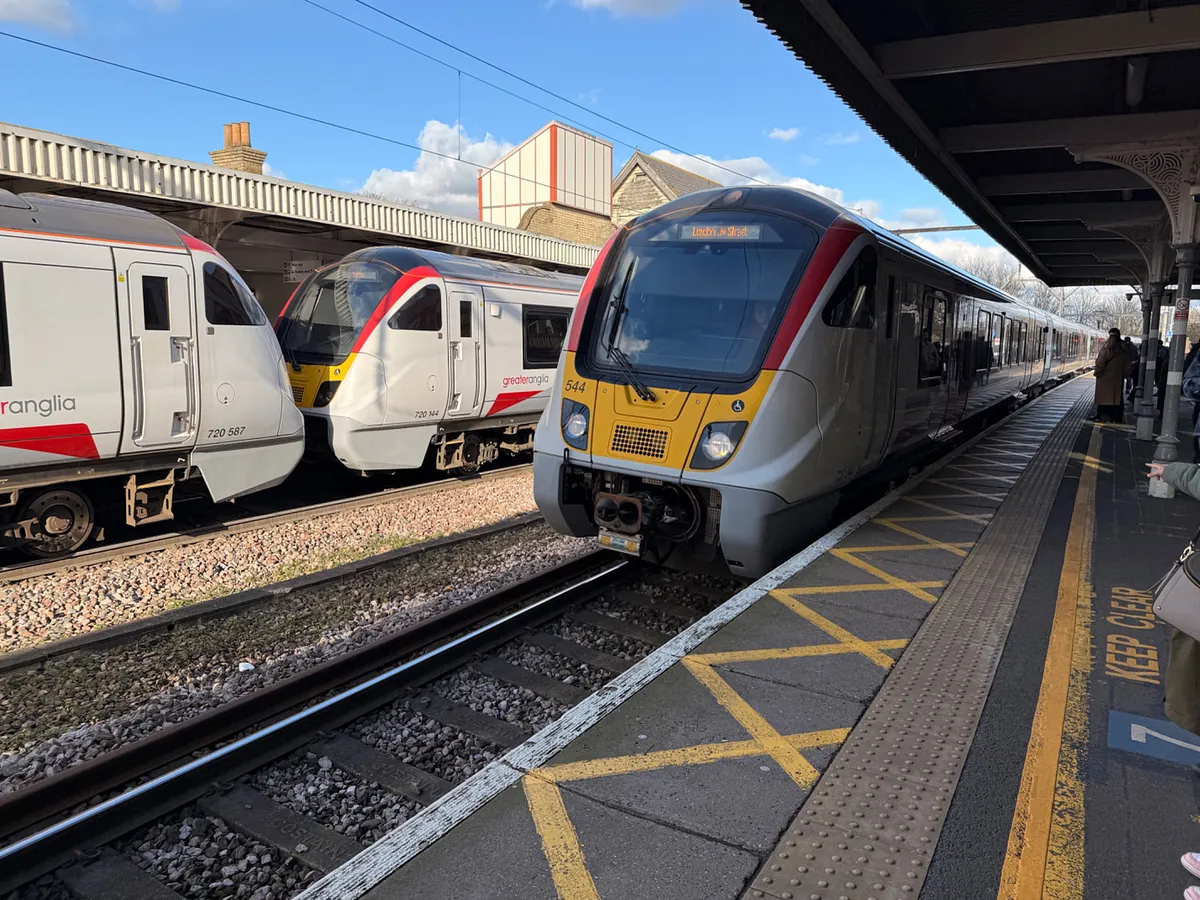
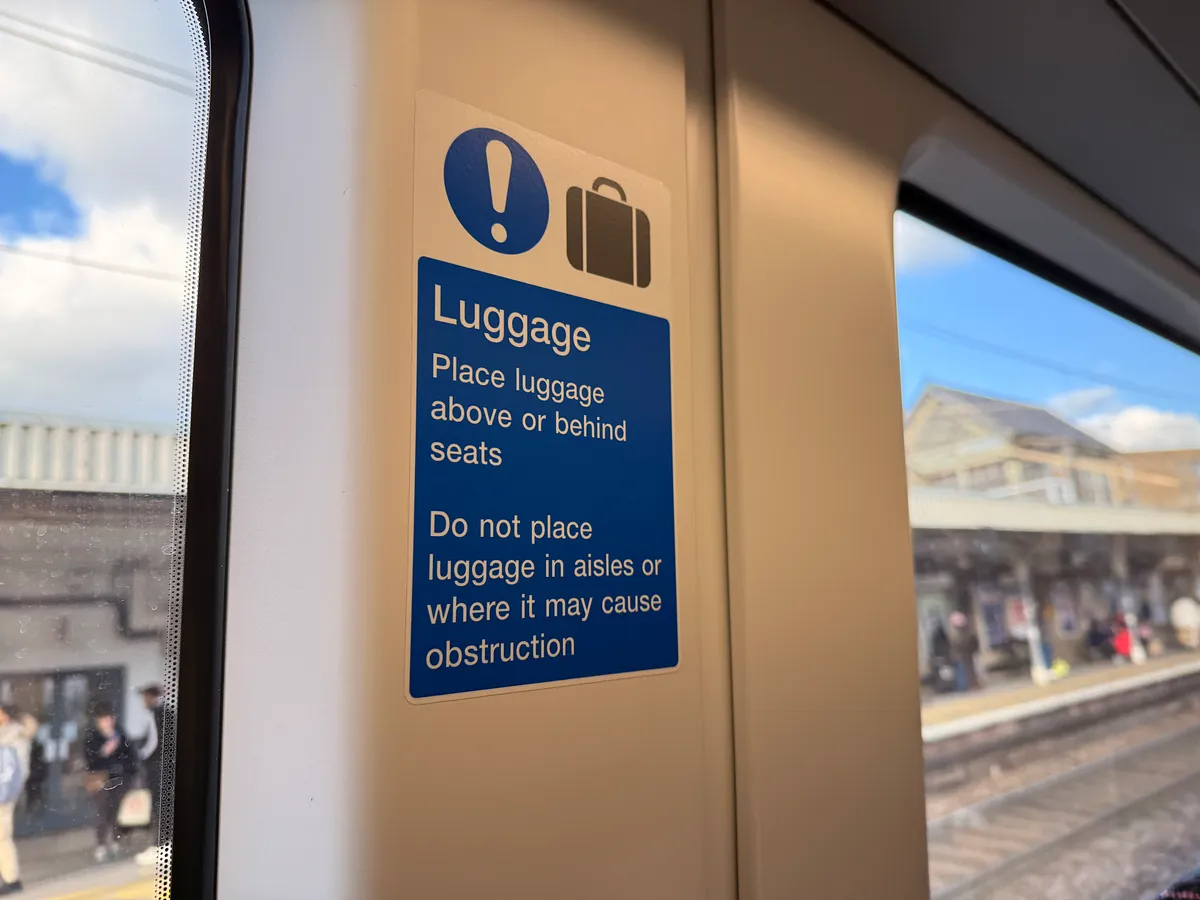
 Luggage storage instructions on a Greater Anglia train between Chelmsford and London Liverpool Street
Chelmsford to London train, the quick answer (what I’d do)
I’ve been taking the train from Chelmsford to London Liverpool Street since I was visiting friends here as a child. It’s a 28-mile run that takes 27 to 29 minutes on the direct services. Greater Anglia operates the route, and most trains are the Class 755 FLIRT units. They’re comfortable, quiet, and surprisingly good for a commuter line.
You arrive at Liverpool Street in Zone 1, which puts you right in the heart of east London with Tube connections and taxis outside. If you’re travelling off-peak (after 09:30 or before 16:00), you’ll get a seat and a decent ride. Avoid peak times unless you fancy standing for half an hour with a suitcase between your knees.
The honest negative: the price. A same-day standard class ticket costs around £20.90 without a railcard. That’s steep for 28 miles, especially if you’re used to transport costs in Ireland like I am. The other issue is peak crowding. If you board between 07:00 and 09:00 or 17:00 and 19:00, you might not get a seat. The trains run frequently, but so do the commuters.
I’d book in advance if you can, use a railcard if you have one, and aim for mid-morning or early afternoon. You’ll save money and stress.
What the journey is actually like on Greater Anglia
The Class 755 FLIRT trains are some of the best regional units I’ve been on in Britain. They’re dual-power, which means they switch between electric and diesel depending on the track. You barely notice the change. The ride is smooth, the noise level is low, and the seats are more comfortable than you’d expect on a commuter service.
This is not a scenic route. You leave Chelmsford, pass through Essex suburbs, and roll into Liverpool Street. The windows are clean, the carriages are modern, but there’s no dining car and no panoramic views. It’s a commuter service designed to get you from A to B in relative comfort. Greater Anglia has invested in the tech, and it shows. You can see which toilets are in use, which carriage you’re in, and where the next stop is on the digital displays.
I’ve taken this route dozens of times, and the experience is consistent. The trains are clean, the staff are efficient, and if you avoid the rush, it’s a perfectly pleasant 29 minutes. But don’t expect luxury. This is functional rail travel done well.
Wi-Fi, plugs, and the on-train tech
Every seat has access to a plug socket, which is a lifesaver if you’re working on your phone or laptop. The overhead racks are generous enough for a suitcase, and the digital displays show real-time information about your route. You can see which toilets are occupied, which carriage you’re in, and when you’re arriving at the next stop.
The Wi-Fi is the weak link. It’s free, but it’s slow and unreliable. I’ve had it drop out completely between stations and never recover. If you need to work online, download everything before you board. Don’t rely on the connection to hold for the full journey.
Food, toilets, luggage space
There’s no dining car, but you can buy sandwiches and drinks from the onboard trolley service. The sandwiches are acceptable. The coffee is drinkable. It’s not a culinary experience, but it’s there if you need it.
Toilets are clearly marked on the digital displays, and they’re usually clean. The overhead racks are the best place for luggage. There’s no dedicated luggage area, so if you’re travelling with a large suitcase, aim for a seat near the end of the carriage where there’s a bit more floor space.
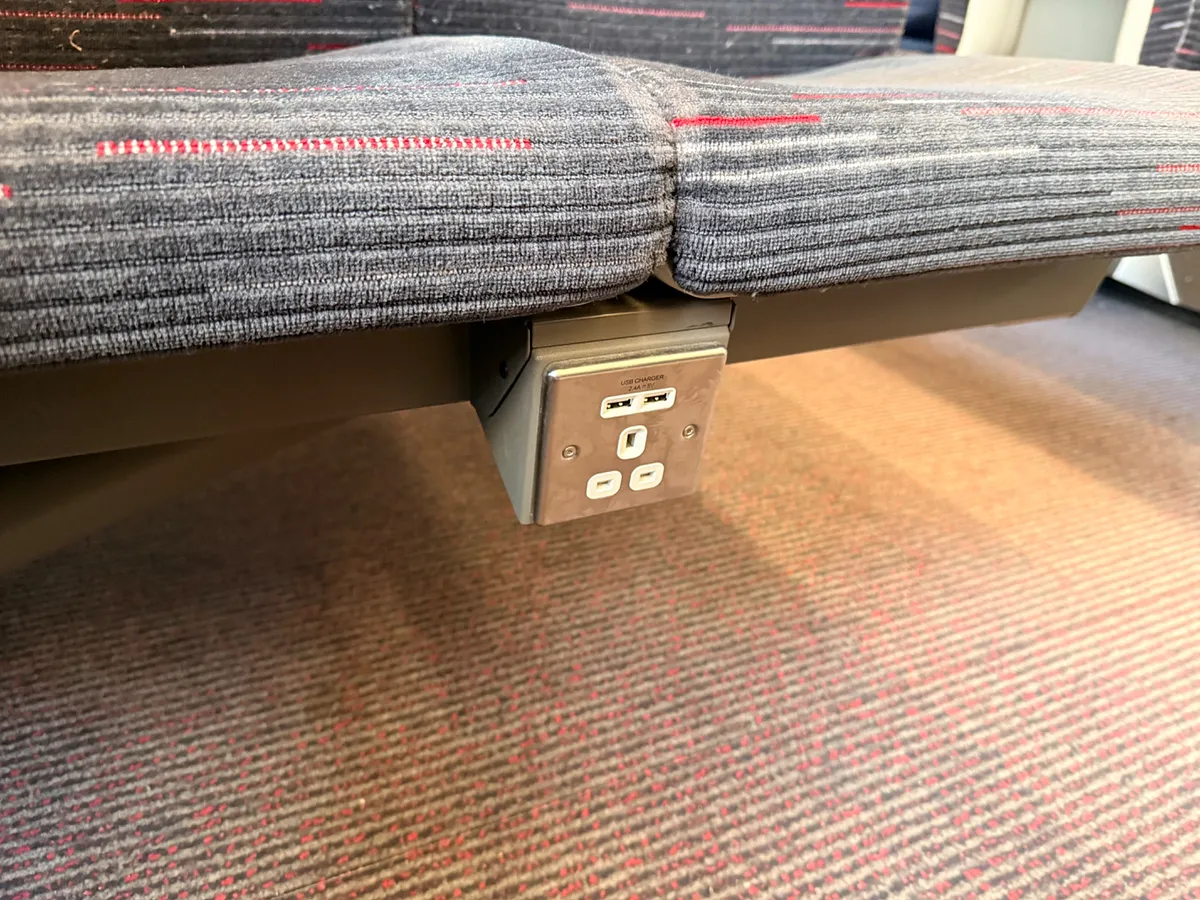 Power outlets and USB charging ports beneath seats on Greater Anglia commuter train
Timings, stops, and which train to pick
The journey from Chelmsford to London Liverpool Street covers 28 miles and takes between 27 and 29 minutes on the direct services. The trains hit speeds of up to 100 mph, which is impressive for a regional route. Frequency is high, especially during peak commuter times. You’ll find trains running every 10 to 15 minutes in the morning and evening rush.
Most services are direct to Liverpool Street, but some stop at Stratford. If you’re connecting to the Tube or DLR, Stratford can be a useful stop. If you’re heading into central London, the direct service is quicker. Check the platform display before you board to confirm which stops your train makes.
The first train from Chelmsford to Liverpool Street typically leaves around 05:00 to 06:00. The last train is around 23:00 to midnight. Timetables vary slightly depending on the day of the week, so check National Rail or the Greater Anglia app for live updates. I’ve found the app reliable for departure times, even if the Wi-Fi on the train itself is patchy.
Tickets and prices, how I’d book it without overpaying
I always book through Trainline or the National Rail app. Both show the same fares, but Trainline’s interface is cleaner and easier to use on a phone. A same-day standard class ticket costs around £20.90 without a railcard. That’s the walk-up fare, and it’s not cheap for a 29-minute journey.
If you book in advance, you can sometimes find cheaper fares, but the savings on this route are minimal compared to longer journeys. Where you’ll save real money is with a railcard. A senior railcard or disabled railcard can cut the cost significantly. I’ve seen return fares drop to around £40 for longer journeys across the Greater Anglia network when a railcard is applied.
You can collect e-tickets at the machines or use the app. I prefer the app because it’s one less thing to carry, but if you’re not confident with mobile tickets, the machines at Chelmsford station are straightforward. Just tap your card, enter your booking reference, and collect your ticket.
One thing to watch: the barriers at Liverpool Street are sometimes open, and ticket checks on the train can be sporadic. Don’t take that as an invitation to skip buying a ticket. You will get caught eventually, and the penalty fare is steep.
Peak vs Off-Peak, and when you might have to stand
Peak times are brutal on this route. If you board between 07:00 and 09:00 or 17:00 and 19:00, expect to stand. The trains are packed with commuters, and even the 12-car services fill up quickly. I’ve done the peak run a few times, and it’s not fun with luggage.
Off-peak is a different experience. After 09:30 and before 16:00, the trains are quieter, you’ll get a seat, and the journey is far more comfortable. If you have any flexibility in your schedule, avoid the rush. The fare is often the same, but the stress level is half.
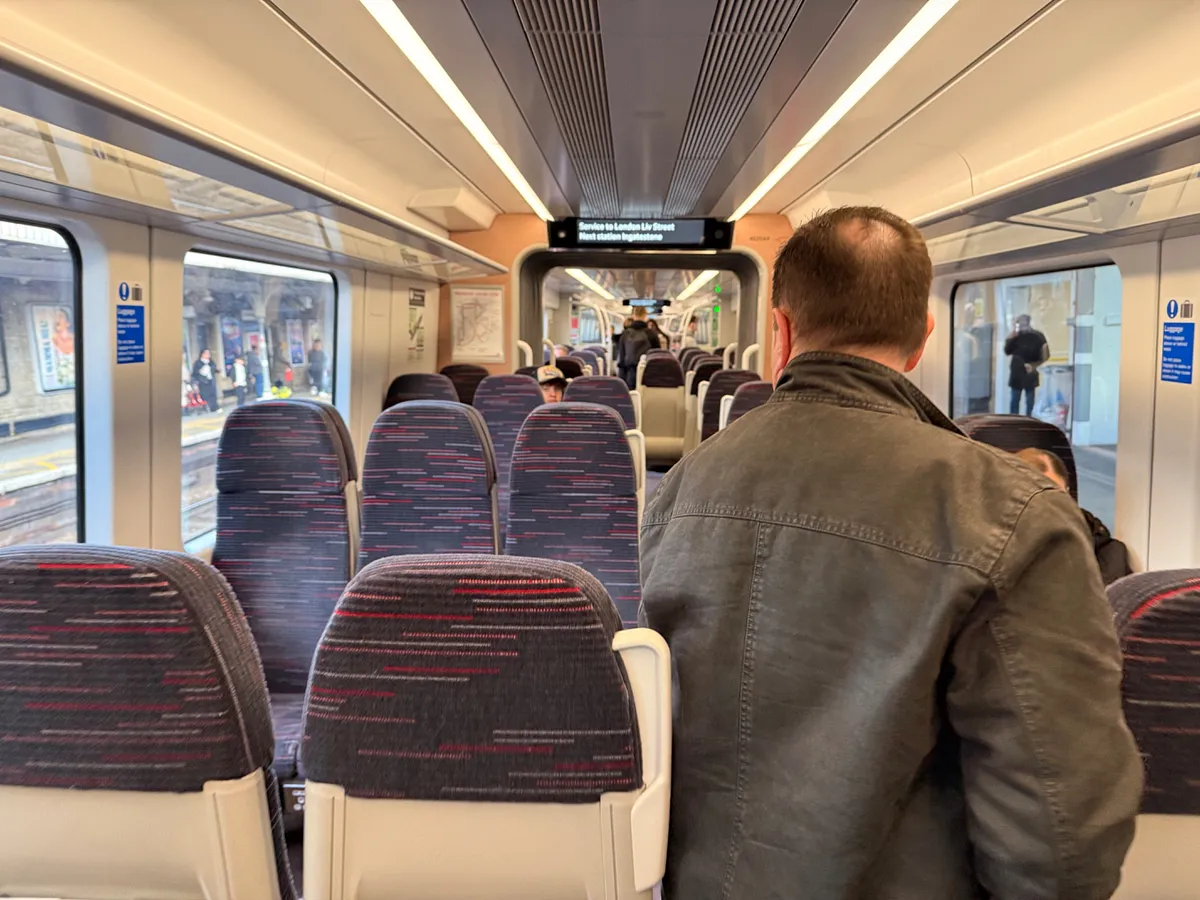 Greater Anglia train interior on the Chelmsford to London Liverpool Street route
Standard vs First Class on this route
Greater Anglia runs Class 745 trains with first class on some services. The first class carriages have dark upholstered seats, more space, and a slightly more upmarket feel. On paper, it sounds good. In practice, it’s hard to justify on a 29-minute journey.
The seats in first class are comfortable for the first 20 minutes, but they get hard after 45 minutes. The tables are small, and the Wi-Fi is reportedly slower than in standard class, which is baffling. If you’re on a busy peak service and you want guaranteed space, first class might be worth it. Otherwise, save your money.
I’d rate first class on this route a 5 out of 10. It’s better than standing, but it’s not a significant upgrade over standard class. The Class 755 standard class seats are good enough that the jump to first doesn’t feel worth the extra cost.
Stations and the transfer, Chelmsford and Liverpool Street
Chelmsford station is central, well-signposted, and easy to navigate. The platforms are clearly marked, and there’s a decent waiting area if you arrive early. Coffee options are limited, but there’s a small café inside the station that does the job. If you need to kill 20 minutes, there are benches and a newsagent.
Liverpool Street is a different beast. It’s a major Zone 1 terminus with connections to the Tube. You’ll find Circle, Hammersmith & City, Metropolitan, Central, and Elizabeth lines here. Taxis wait outside, and there are plenty of coffee shops. The station is busy, but it’s well organised. Follow the signs for the Tube or the main exit, and you’ll be fine.
If you’re connecting to another train or the Tube, give yourself at least 15 minutes. The station is large, and the platforms can be a five-minute walk from the Tube entrance. I’ve made tight connections here, but it’s not relaxing. Build in a buffer if you’re carrying luggage.
Platform and boarding tips that reduce stress
Check the departure boards carefully. Liverpool Street also serves trains to other destinations, and it’s easy to confuse Liverpool Street with Lime Street (which is in a completely different city). Make sure you’re on the right platform for Chelmsford.
The 12-car trains can be long, and the platform gets crowded during peak times. I aim for the middle of the train. The ends fill up first with people trying to be near the exits, but the middle carriages often have more space. If you’re travelling with luggage, board early and grab a seat near the overhead racks.
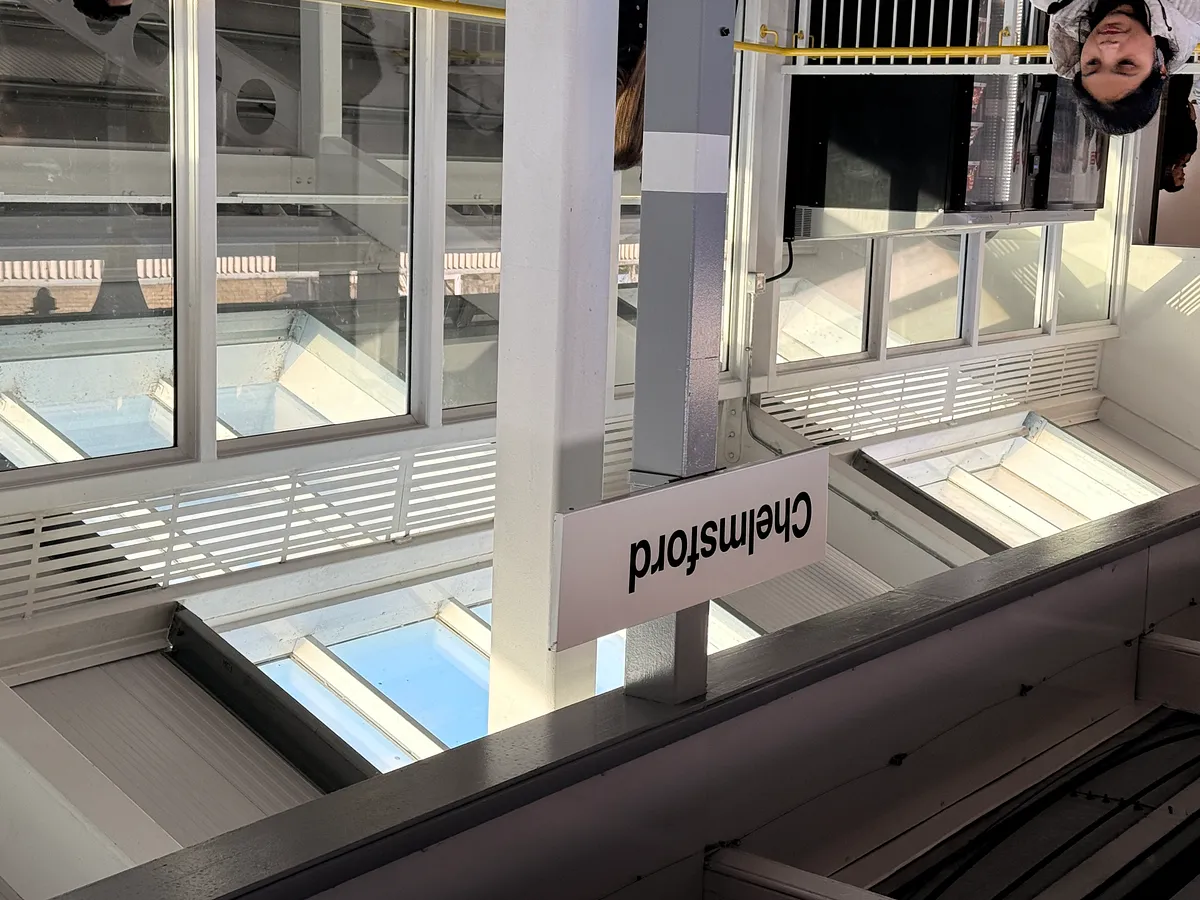 Chelmsford station platform shelter with modern glass and metal construction
Delays, cancellations, and what I’d do if it goes wrong
Delays happen. I’ve been caught in 20-minute delays caused by level crossing barriers, and the staff didn’t announce it until I was already sitting still. Check the National Rail app or the Greater Anglia website for live updates before you leave. Don’t rely on station announcements alone.
Cancellations are less common, but they do occur. If your train is cancelled, the next service is usually 10 to 15 minutes away during peak times. Off-peak, you might wait 30 minutes. The app will show you the next available train, and you can usually board without changing your ticket.
Rail replacement buses are the backup plan if the line is completely blocked. They leave from a depot near the station, usually a five to ten-minute walk. The buses cost around £2 and take about 45 minutes to cover the same distance as the train. They’re slower, but they’re reliable. Signposting for the buses could be better. Ask station staff if you’re not sure where to go.
Is the train better than driving or taking a coach?
The train wins on this route. Driving from Chelmsford to central London takes at least an hour in good traffic, and parking in Zone 1 is expensive and stressful. The train gets you there in 29 minutes, drops you at a major Tube hub, and you don’t have to worry about congestion or parking fees.
Coaches are slower and less frequent. National Express runs services from Chelmsford to London, but they take over an hour and cost roughly the same as the train. There’s no advantage unless you’re travelling overnight or need a specific coach-only route.
The honest caveat: reliability and peak pricing can sting. If you’re commuting daily, the cost adds up quickly. If you’re travelling off-peak as a visitor, the train is excellent. Just avoid the rush, book in advance where possible, and keep the National Rail app open for live updates.