Rail Travel in Canada
A practical intercity corridor between Toronto, Montreal, and Ottawa. Two legendary long-distance sleeper trains. And the Rocky Mountaineer for those with deeper pockets. Canada by rail is three different experiences.
Three Countries in One
Canada's rail network is really three separate experiences wearing the same maple leaf.
The Corridor is genuinely useful transport. Toronto to Montreal in under five hours, Montreal to Ottawa in two. Frequent services, business class available, new Siemens trains rolling out. This is the part of VIA Rail that competes with flying and driving on the busiest routes in the country.
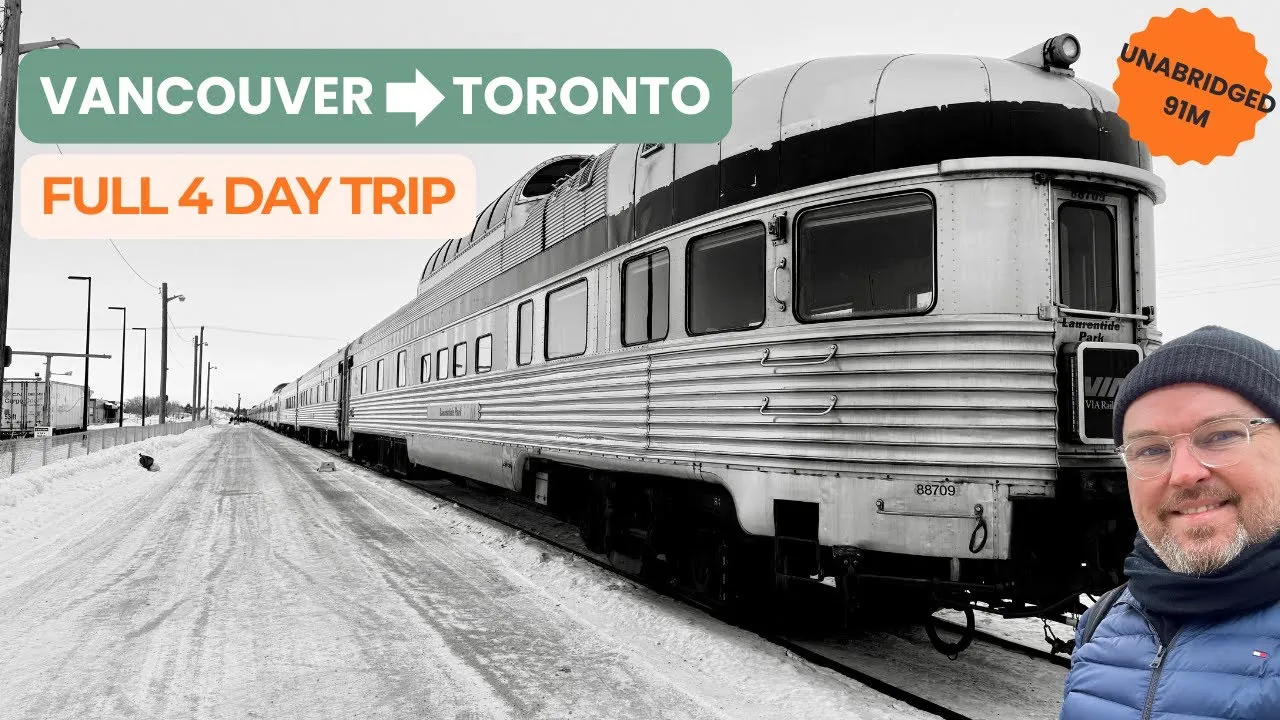
The long-distance trains are something else entirely. The Canadian from Toronto to Vancouver takes four days across the prairies and through the Rockies. The Ocean from Montreal to Halifax runs overnight through Quebec and New Brunswick. These are not transport. They are experiences that happen to use rails. Budget accordingly.
And then there is the Rocky Mountaineer, which is not VIA Rail at all. It is a private luxury operator running daylight-only scenic trains through the Rockies at prices that start where VIA's Prestige class ends. Beautiful, expensive, and a completely different product.
The Corridor is VIA Rail's bread and butter. Frequent intercity services connecting Canada's biggest cities in Ontario and Quebec. Business class is worth considering for the meal, lounge access, and flexibility. New Siemens "Venture" trains are being phased in on some Corridor departures - a significant upgrade in comfort and reliability over the older equipment.
Tickets & Booking
All VIA Rail services - Corridor, The Canadian, and The Ocean - are booked through one website: viarail.ca. Dynamic pricing applies to all routes. Book 2-4 weeks ahead for the best Corridor fares, and months ahead for summer sleeper berths on The Canadian and The Ocean.
Rocky Mountaineer is a completely separate operator with its own booking site: rockymountaineer.com. Packages typically include hotel nights and transfers.
Classes of Travel
VIA Rail offers different classes depending on the route type. The Corridor has Economy and Business. The long-distance trains (The Canadian, The Ocean) have Economy, Sleeper Plus, and on The Canadian only, Prestige. New Siemens "Venture" trains are being phased in on some Corridor departures, a significant upgrade in comfort and reliability.
Practical Intelligence
Canada's Corridor is practical transport that happens to be pleasant. Canada's long-distance trains are journeys that happen to get you somewhere. Know which one you are booking.
Route Guides
Detailed planning guides for every VIA Rail service, Rocky Mountaineer route, and commuter network in Canada.
Canada's busiest rail route and the backbone of the Corridor. Flat and not particularly scenic, but fast, frequent, and a genuine alternative to flying. Business class includes a meal and lounge access at both ends.
The shortest Corridor hop. Quick enough that the train genuinely beats flying when you factor in airport time. Some services are through-trains to/from Toronto. Part of the early rollout for the new Venture fleet.
The third leg of the Corridor triangle. Mix of direct trains and services that originate in Montreal or Quebec City. Some departures are now on the new Venture trainsets.
The Corridor's eastern extension along the St Lawrence. More scenic than the Toronto-Montreal run. Arrives at Sainte-Foy station, not central Quebec City. Budget for a taxi or bus into the Old Town.
A useful Corridor leg that most people overlook. Kingston is a genuine destination, not just a stop on the way to Montreal. Through-ticketing to Montreal or Ottawa is straightforward.
The southwest Ontario Corridor. Functional rather than scenic. Some trains are limited-stop express. Windsor is the westernmost Corridor endpoint in Ontario.
The transcontinental. Four days across Canada from Toronto to Vancouver, with dome cars, dining cars, and the Canadian Rockies as the finale. The prairies can feel long. The Rockies make you forget. Economy is a seat for four days. Sleeper Plus is the sweet spot. Prestige is extraordinary if you have the budget.
Canada's overnight train to the Maritimes. Less famous than The Canadian but with its own charm. Sleeper Plus includes meals in the dining car. The route follows the St Lawrence, cuts through New Brunswick, and arrives in Halifax the following evening.
The flagship Rocky Mountaineer route through the Canadian Rockies. Panoramic dome coaches, gourmet meals, commentary. GoldLeaf has a bi-level glass-dome coach with outdoor viewing platform. The scenery through Kicking Horse Pass and the Spiral Tunnels is extraordinary.
The alternative Rockies route via Yellowhead Pass and Mount Robson (the Canadian Rockies' highest peak). Less famous than First Passage to the West but equally spectacular. Connects to Jasper for onward VIA Rail travel on The Canadian.
The longest Rocky Mountaineer route. Through the Sea-to-Sky corridor to Whistler, then north through the Cariboo region to Quesnel before turning east to Jasper. More diverse scenery than the other routes. The least-known and arguably the most interesting.
Seven commuter corridors radiating from Union Station. GO Expansion program aiming for all-day, two-way service with electrification on core lines between 2025-2032. The Lakeshore lines are already useful for visitors reaching suburbs and lakeside areas.
Five commuter lines from central Montreal. Strongly peak-oriented with most lines weekday-only. Vaudreuil-Hudson operates 7 days a week. The REM automated light metro is more relevant to visitors than Exo.
Reviews & First-Hand Reports
I have taken every VIA Rail Corridor route, The Canadian transcontinental, and The Ocean to Halifax. Here is what I found.

Route notes and rail wisdom
New route reviews, booking updates, and honest rail pass advice. Sent monthly from the north of Ireland, read by train travellers worldwide.
No spam. Unsubscribe anytime.